
Sclerotherapy in Cutler Bay
A straightforward in-office treatment for spider veins and small varicose veins on the legs — no anesthesia, no incisions, and you walk out and carry on with your day.
How sclerotherapy works
Spider veins are small blood vessels close to the skin's surface that have stretched and become visible, typically as fine red, blue or purple lines on the thighs, calves and ankles. They occur when the tiny valves inside the vein stop working properly and blood pools instead of flowing back toward the heart.
Sclerotherapy treats them directly. Using a very fine needle, a solution called a sclerosant is injected into the vein. It irritates the vessel wall, causing it to collapse and seal shut. Blood immediately reroutes through healthy deeper veins, and over the following weeks your body breaks down and reabsorbs the closed vessel, so it fades from view.
Sclerotherapy has been in clinical use for decades and remains the standard treatment for small-vessel leg veins.
What it treats
- Spider veins (telangiectasias) on the thighs, calves and ankles
- Reticular veins — the slightly larger blue-green veins that often feed spider veins
- Small varicose veins that do not require surgical intervention
- Veins causing aching, burning, itching or heaviness, not only cosmetic concern
Large, rope-like bulging varicose veins usually indicate underlying venous insufficiency and need vascular assessment, often with ultrasound. If your examination suggests that, we will refer you to a vein specialist rather than treat the surface and leave the cause.
The appointment
Sessions run about twenty to forty-five minutes depending on how many veins are treated. You lie down, the skin is cleaned, and each target vein is injected with a very fine needle. Most patients find the sensation minor — a small sting or cramping feeling that passes in seconds. No anesthesia is used.
Afterwards, compression stockings are applied and we ask you to wear them for one to two weeks. Compression significantly improves results and reduces the chance of discolouration, so it is worth taking seriously.
Aftercare and recovery
You walk out immediately and normal activity is not only allowed but encouraged — walking helps circulation. Avoid strenuous exercise, hot baths, saunas and direct sun on the treated legs for about a week. In South Florida, diligent sun protection on treated legs matters, since UV exposure can worsen temporary pigmentation.
Expect bruising and slightly raised, tender lines along the treated veins in the first weeks. Some patients develop light brown pigmentation along the vein path, which usually fades over several months.
Results and number of sessions
Treated veins do not disappear overnight. Small spider veins typically fade over three to six weeks; larger reticular veins can take three to four months. Most patients need two to four sessions spaced four to six weeks apart to clear a given area, because veins are treated in layers.
Veins that are successfully closed do not come back. However, sclerotherapy does not prevent new spider veins from forming, and the genetic predisposition, hormonal factors, pregnancy and prolonged standing that caused the first set remain. Many patients return for a short touch-up session every year or two.
- 20–45 min
- Appointment time
- 2–4
- Typical sessions
- 1–2 weeks
- Compression
- None
- Downtime
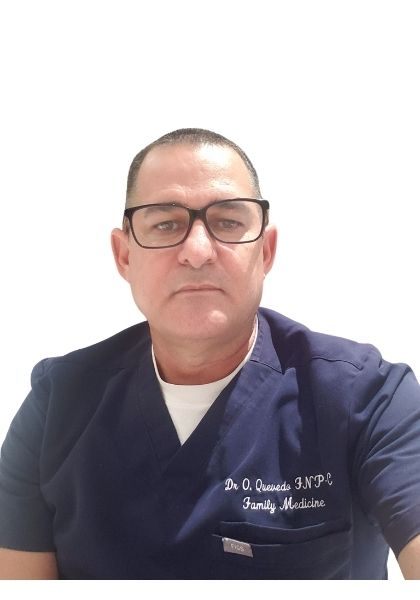
Orlando Quevedo Yanez, APRN, IMG
Advanced Practice Registered Nurse and international medical graduate with more than 20 years of clinical experience, including 12 years in family medicine. Founder of Florida Healthcare Solutions in Cutler Bay. View full profile.
Medical disclaimer: This page is for general information and is not a substitute for professional medical advice, diagnosis or treatment. Individual results vary. Always speak with a qualified healthcare provider about your specific situation.
Why treat leg veins here
- No anesthesia, no incisions and no time off work
- Honest triage — we refer out rather than treating veins that need vascular surgery
- Evaluated by a provider who also manages your general cardiovascular health
- Compression and aftercare explained properly, which materially affects the result
- Multiple areas treated in one session where appropriate
- Consultations in English and Spanish
Frequently asked questions
Does sclerotherapy hurt?
Most patients tolerate it easily. The needle is very fine and the sensation is usually described as a brief sting or mild cramping that fades within seconds. No anesthesia is required, and there is no pain afterwards beyond mild tenderness along the treated veins.
How many treatments will I need?
Most areas need two to four sessions spaced four to six weeks apart. Veins are treated in layers, and the feeder vessels beneath the visible ones often need to be addressed before the surface veins clear fully. We will estimate a realistic number at your consultation.
How long until the veins disappear?
Small spider veins generally fade over three to six weeks. Larger reticular veins can take three to four months to fully reabsorb. Bruising and slight discolouration during the first weeks are part of the normal process, not a sign of failure.
Will the veins come back?
A vein that has been successfully closed does not reopen. But sclerotherapy does not stop new veins from developing, and the underlying factors — genetics, hormones, pregnancy, prolonged standing — remain. Many patients come back for a brief touch-up every year or two.
Do I really have to wear compression stockings?
Yes, and it makes a real difference. Compression keeps the treated vein walls held together while they seal, improves clearance and reduces the risk of brown pigmentation. We ask for one to two weeks of consistent wear and will fit you with the correct grade.
Is sclerotherapy covered by insurance?
Sclerotherapy performed purely for cosmetic reasons is not covered. When veins cause documented medical symptoms such as pain, swelling, skin changes or ulceration, some plans provide coverage, usually after a vascular ultrasound. We can advise on whether your situation may qualify.
Can I have it done if I am pregnant?
No. Sclerotherapy is not performed during pregnancy or while breastfeeding. Many pregnancy-related spider veins improve on their own in the months after delivery, so we generally recommend waiting at least three to six months postpartum before assessing what still needs treatment.
Ready to take the next step?
Book a consultation at our Cutler Bay office. We see patients in English and Spanish, and Saturday appointments are available.