
Hormone replacement therapy in Cutler Bay
Treatment for the symptoms of perimenopause and menopause — hot flushes, night sweats, broken sleep, mood changes, brain fog and vaginal dryness — prescribed after a proper evaluation and monitored over time.
Symptoms that are worth treating
The transition through perimenopause and menopause is not a single event. It can stretch over years, and the symptoms are often dismissed — by employers, by families, and sometimes by clinicians. Hot flushes and night sweats are the best known, but broken sleep, irritability, low mood, anxiety, difficulty concentrating, joint aches, loss of libido, vaginal dryness and painful intercourse are all part of the same picture.
These are treatable. For many women, hormone therapy is the single most effective treatment available for moderate to severe vasomotor symptoms, and it also protects bone density. That is the mainstream medical position, not a fringe one.
Where the risk conversation actually stands
Hormone therapy was widely abandoned after the Women's Health Initiative results were published in 2002. The interpretation has since been substantially revised. Current guidance from major menopause and obstetric societies is that for healthy women under 60, or within ten years of their last period, the benefits of systemic hormone therapy generally outweigh the risks for treating bothersome menopausal symptoms.
That is not the same as saying it is risk-free, and it is not the same as saying it is right for everyone. Risk depends on your age, how long ago menopause began, whether you still have a uterus, your personal and family history of breast cancer, your clotting history, your blood pressure and your cardiovascular risk. The route matters too — transdermal oestrogen carries a lower clot risk than oral.
We go through this with you properly, in plain language, and we write down what we decided and why.
Bioidentical hormones: what the term does and does not mean
"Bioidentical" simply means the hormone molecule is structurally identical to the one your body makes. Several FDA-approved products meet that description — micronised progesterone and 17-beta estradiol among them — and those are what we generally prescribe.
What we are cautious about is custom-compounded hormone preparations and pellets marketed as a safer, more natural alternative. Those compounded products are not FDA-approved, their dose consistency is not verified the same way, and the claim that they are safer than approved bioidentical products is not supported by evidence. Salivary hormone testing, often sold alongside them, does not reliably guide dosing. If you have been told otherwise elsewhere, we are happy to explain the difference.
How we evaluate
A first visit takes time. We go through your symptoms and how much they are affecting your life, your menstrual history, your personal and family cancer history, clotting history, migraine history, blood pressure, and anything else you are already taking. Depending on your situation we may check thyroid function, FSH and estradiol, a lipid panel, A1c and vitamin D — because thyroid disease and anaemia imitate menopause closely.
We confirm you are up to date on mammography and cervical screening before starting systemic therapy. If you still have a uterus, oestrogen is always paired with a progestogen to protect the endometrium — that is not optional.
Men
Hormone therapy in men is a different evaluation with different labs and different risks. That is covered on our testosterone replacement therapy page.
Monitoring
We review you at around three months to assess symptom control, side effects and blood pressure, then at least annually. Doses are adjusted to the lowest that controls your symptoms. We revisit the decision to continue periodically rather than leaving you on a repeat prescription indefinitely, and if vaginal dryness is your only complaint, low-dose local oestrogen is usually the better answer than systemic therapy.
- 45–60 min
- First consultation
- $500
- Price from
- ~3 months
- First review
- At least annual
- Ongoing monitoring
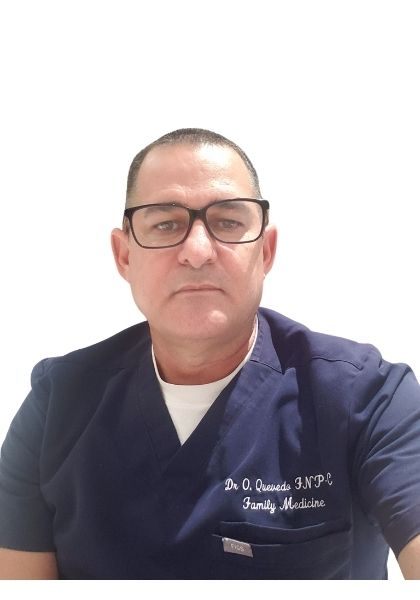
Orlando Quevedo Yanez, APRN, IMG
Advanced Practice Registered Nurse and international medical graduate with more than 20 years of clinical experience, including 12 years in family medicine. Founder of Florida Healthcare Solutions in Cutler Bay. View full profile.
Medical disclaimer: This page is for general information and is not a substitute for professional medical advice, diagnosis or treatment. Individual results vary. Always speak with a qualified healthcare provider about your specific situation.
How we approach hormone therapy
- A long first visit focused on your symptoms and your actual risk profile
- FDA-approved bioidentical options preferred over custom-compounded pellets
- Transdermal routes considered where clot risk matters
- Thyroid, anaemia and metabolic causes ruled out before attributing everything to menopause
- Endometrial protection with a progestogen whenever you still have a uterus
- Screening status confirmed before systemic therapy begins
- Lowest effective dose, reviewed rather than renewed indefinitely
- Consultations in English and Spanish
Frequently asked questions
How much does hormone replacement therapy cost?
The hormone therapy programme starts at $500, which covers the extended initial evaluation and the first phase of treatment. Laboratory work and the cost of the prescription itself are separate, and we will set out the numbers before you commit to anything.
Is HRT safe?
For healthy women under 60, or within ten years of their final period, major menopause societies conclude that the benefits of systemic hormone therapy generally outweigh the risks when treating bothersome symptoms. Risk is individual and depends on your age, time since menopause, cancer and clotting history, blood pressure and cardiovascular risk. Transdermal oestrogen carries a lower clot risk than oral. We go through all of this with you before prescribing.
What is the difference between HRT and bioidentical HRT?
Bioidentical simply means the hormone molecule is identical to the one your body produces. Several FDA-approved products are bioidentical, including micronised progesterone and 17-beta estradiol, and those are what we generally use. The term is often used to market custom-compounded preparations instead, which is a different and less well-regulated thing.
Are hormone pellets a good option?
We are cautious about them. Compounded pellets are not FDA-approved, deliver a dose that cannot be adjusted or withdrawn once implanted, and are frequently dosed above physiological levels. The claim that they are safer or more natural than approved bioidentical products is not supported by evidence. If you are currently on pellets we will not pressure you, but we will explain our reasoning.
Do I need blood tests to start?
Usually yes, though menopause is diagnosed clinically rather than by a hormone level. We test to rule out the conditions that imitate it — thyroid disease and anaemia in particular — and to establish a metabolic baseline. In younger women FSH and estradiol can help confirm the picture.
How soon will I feel better?
Hot flushes and night sweats often improve within two to four weeks, and sleep usually follows. Mood and concentration tend to take longer. Vaginal symptoms treated with local oestrogen typically take several weeks. We reassess at around three months.
How long can I stay on hormone therapy?
There is no fixed cut-off, and the old advice to stop at five years regardless of symptoms is no longer the standard. We review the decision with you at least annually, weighing your current symptoms, your age and your changing risk profile, and use the lowest dose that keeps you comfortable.
Does HRT cause weight gain?
Hormone therapy itself is not a reliable cause of weight gain. The weight change many women notice around menopause is driven mainly by age, loss of muscle mass and shifting fat distribution. If weight is a concern we will address it directly rather than blaming or crediting the hormones.
What if I only have vaginal dryness?
Then systemic hormone therapy is usually more than you need. Low-dose local vaginal oestrogen treats dryness and painful intercourse effectively, with minimal systemic absorption and a different, more favourable risk profile. We will say so rather than prescribing more than the problem requires.
Ready to take the next step?
Book a consultation at our Cutler Bay office. We see patients in English and Spanish, and Saturday appointments are available.