
Sermorelin therapy in Cutler Bay
A growth hormone releasing peptide, prescribed and supervised by a clinician — with a straight explanation of its regulatory status, what the evidence supports, and who should not take it.
What sermorelin is
Sermorelin is a synthetic fragment of growth hormone releasing hormone. Rather than supplying growth hormone directly, it signals your own pituitary gland to release it. Because the pituitary still regulates the output, levels follow your body's natural pulsatile rhythm instead of being driven from outside — which is the mechanistic argument for preferring it over injected human growth hormone.
It is given as a small subcutaneous injection, usually at night, because that is when the body's own growth hormone pulse is largest.
Its regulatory status, stated plainly
Sermorelin was previously approved by the FDA as a diagnostic agent and for growth hormone deficiency in children, under the brand name Geref. That product was withdrawn from the US market in 2008 and sermorelin is no longer an FDA-approved drug. What is available today is a compounded preparation, prepared by a compounding pharmacy.
That matters for three reasons. Compounded medicines are not reviewed by the FDA for safety, effectiveness or manufacturing quality in the way approved drugs are. There is no approved indication for sermorelin in adults. And the pharmacy you use genuinely matters — we prescribe only through licensed US compounding pharmacies, never from an overseas "research peptide" supplier.
Anyone who presents sermorelin to you as an FDA-approved anti-ageing treatment is either misinformed or selling you something.
What the evidence does and does not support
Sermorelin does measurably raise growth hormone and IGF-1 levels. That is well documented. Whether raising those levels in an adult without diagnosed growth hormone deficiency produces durable benefits in body composition, sleep quality, recovery or energy is much less well established. The clinical trial base in healthy adults is small, short and not of the quality that would support confident promises.
We are willing to prescribe it with supervision for appropriate adults. We are not willing to tell you it reverses ageing, builds muscle like anabolic steroids, or replaces sleep, training and nutrition. Patients who get results from peptide therapy are almost always the ones who also fixed those three things.
Evaluation before prescribing
Fatigue, poor recovery, declining muscle mass, weight gain and bad sleep have common causes that are far more likely than growth hormone decline: hypothyroidism, low testosterone, iron deficiency, obstructive sleep apnoea, depression and insulin resistance. Because we also provide primary care, we look for those first.
A typical workup includes IGF-1, a complete blood count, a comprehensive metabolic panel, thyroid function, A1c, fasting glucose and — in men — morning testosterone. If something treatable turns up, we treat that, and you may not need a peptide at all.
Who should not take it
Sermorelin is not prescribed in active malignancy, because growth hormone pathway stimulation in the presence of cancer is a theoretical risk nobody should accept casually. We are cautious in diabetes and insulin resistance, since growth hormone opposes insulin and can raise blood glucose. It is not given in pregnancy or breastfeeding, nor to people with an active pituitary disorder without endocrinology input.
Side effects are usually local — redness, itching or swelling at the injection site. Headache, flushing, transient dizziness and water retention occur less commonly. Joint aches and carpal tunnel symptoms are the signal that the dose is too high, and we reduce it rather than pushing through.
Monitoring
We recheck IGF-1 and metabolic labs at around three months and at intervals thereafter, with the aim of keeping IGF-1 within the normal range for your age rather than driving it as high as possible. Sermorelin is a supervised prescription here, not a subscription box.
- 45–60 min
- First consultation
- $400
- Price from
- Nightly subcutaneous
- Administration
- ~3 months
- First lab recheck
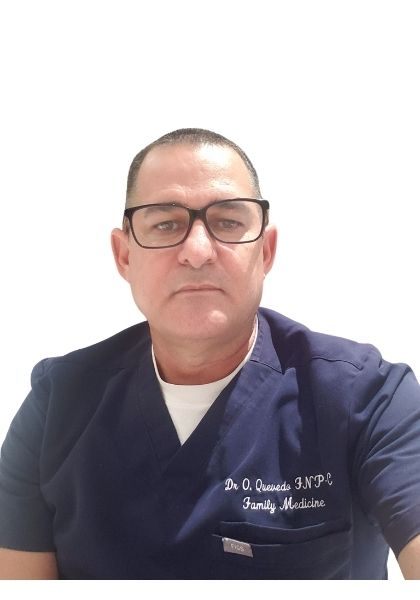
Orlando Quevedo Yanez, APRN, IMG
Advanced Practice Registered Nurse and international medical graduate with more than 20 years of clinical experience, including 12 years in family medicine. Founder of Florida Healthcare Solutions in Cutler Bay. View full profile.
Medical disclaimer: This page is for general information and is not a substitute for professional medical advice, diagnosis or treatment. Individual results vary. Always speak with a qualified healthcare provider about your specific situation.
How we prescribe sermorelin
- Straight explanation of its compounded, non-FDA-approved status before you decide
- Thyroid, testosterone, iron, sleep apnoea and insulin resistance ruled out first
- Prescribed only through licensed US compounding pharmacies
- IGF-1 targeted to the normal range for your age, not pushed as high as possible
- Contraindications screened: active malignancy, pregnancy, pituitary disease
- Dose reduced at the first sign of joint aches or fluid retention
- Supervised treatment with scheduled lab rechecks, not a mail-order subscription
- Consultations in English and Spanish
Frequently asked questions
How much does sermorelin therapy cost?
The programme starts at $400. The medication is dispensed by a compounding pharmacy and billed separately, and laboratory work is additional. We will give you the full picture of the cost before you start rather than after.
Is sermorelin FDA-approved?
No. Sermorelin was approved under the brand name Geref as a diagnostic agent and for growth hormone deficiency in children, but that product was withdrawn from the US market in 2008. What is prescribed today is a compounded preparation, which the FDA does not review for safety, effectiveness or manufacturing quality the way it reviews approved drugs. Anyone telling you otherwise is mistaken.
How is sermorelin different from HGH?
Human growth hormone supplies the hormone directly and overrides your body's own control. Sermorelin instead stimulates your pituitary to release growth hormone, so output still follows your natural pulsatile rhythm and remains subject to normal feedback. In principle that makes excessive levels less likely, though it also means it will not work if the pituitary itself is the problem.
How is it taken?
As a small subcutaneous injection, usually taken at night before bed, since that is when the body's largest natural growth hormone pulse occurs. The injections are shallow and use a very fine needle; we teach you the technique at your visit.
How long before I notice anything?
Changes in sleep quality are often the first thing people report, sometimes within a few weeks. Any changes in body composition or recovery develop slowly over months, if they develop at all. We reassess with labs at around three months and judge from there.
Is sermorelin safe?
The common side effects are local — redness, itching or swelling where you inject. Headache, flushing, brief dizziness and fluid retention are less frequent. Joint aches or carpal tunnel symptoms indicate the dose is too high and we lower it. The honest caveat is that long-term safety data in healthy adults taking it for wellness purposes is limited, which is part of why we monitor.
Will it build muscle or burn fat?
It is not an anabolic steroid and it will not act like one. Some people report improved recovery, sleep and body composition, but the trial evidence in healthy adults is small and short, and the people who get results are nearly always the ones who also corrected their sleep, training and nutrition. We will not promise you more than that.
Do I need blood tests?
Yes. Before starting we typically check IGF-1, a complete blood count, a comprehensive metabolic panel, thyroid function, A1c, fasting glucose and, in men, a morning testosterone. The point is partly to establish a baseline and partly to find the treatable conditions that imitate these symptoms — several of which are far more common than declining growth hormone.
Who should not take sermorelin?
It is not prescribed in active cancer, in pregnancy or breastfeeding, or in people with an untreated pituitary disorder without endocrinology input. We are cautious in diabetes and insulin resistance, because growth hormone raises blood glucose. We go through your full history before writing anything.
Ready to take the next step?
Book a consultation at our Cutler Bay office. We see patients in English and Spanish, and Saturday appointments are available.